01
Born in the high Himalaya
Most of India's seabuckthorn grows in Ladakh — over 70% of the country's harvest — gathered by hand from wild bushes in September and October.
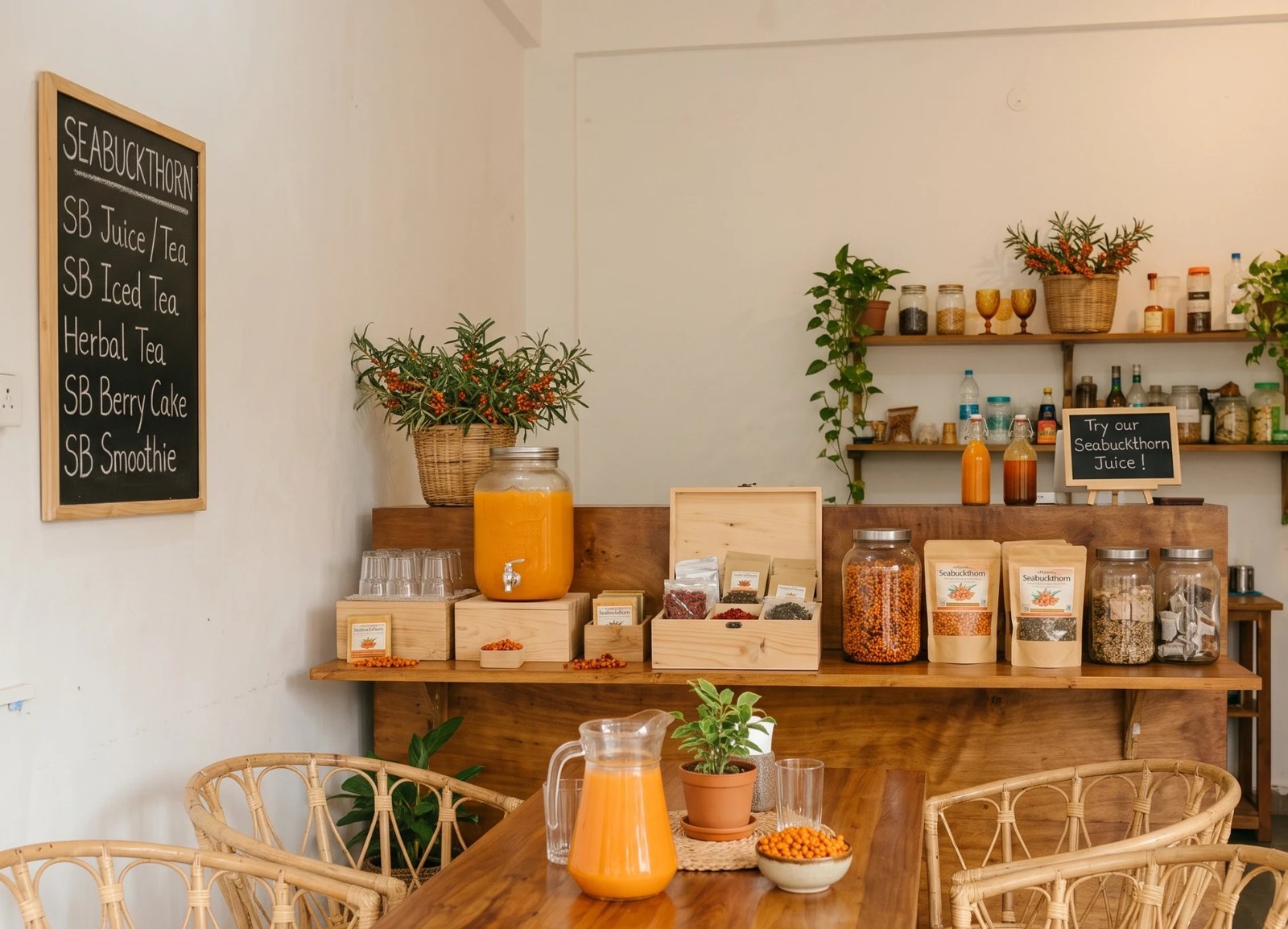 Opening soon
Preview image · real photos coming soon
Opening soon at Morjim, North Goa
From the cold deserts of Ladakh to the warm sands of Goa.
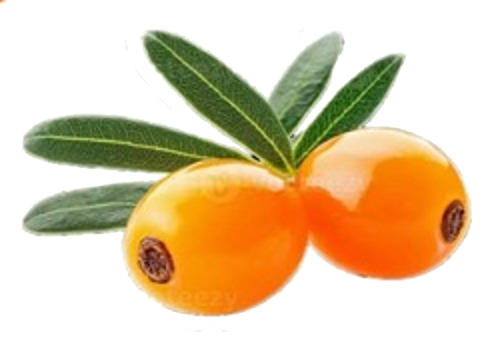
Seabuckthorn (Hippophae rhamnoides) is a thorny shrub that thrives where little else can — high, dry, wind-swept Himalayan valleys. Each autumn it bursts into clusters of bright orange berries that Ladakhis have long called the “Leh berry”.
The berry is tart, bright and almost tropical in flavour, and it carries an unusual mix of nutrients: vitamin C, vitamin E, carotenoids, and a blend of omega 3, 6 and 9 — plus the rare omega‑7 (palmitoleic acid), found in very few plants.
We're bringing it down from the mountains to the coast — in shots, teas and coolers made for the Goan sun.
A berry with a long history, and a lot of modern curiosity.
Most of India's seabuckthorn grows in Ladakh — over 70% of the country's harvest — gathered by hand from wild bushes in September and October.
Seabuckthorn fruit oil is among the richest plant sources of palmitoleic acid (omega‑7), alongside omegas 3, 6 and 9.
Seabuckthorn appears in Tibetan medical texts from as early as the 8th century, and has long been valued by travellers at high altitude.
“Ladakh Sea Buckthorn” received a Geographical Indication tag in November 2023 — Ladakh's fourth, after Pashmina and the Raktsey Karpo apricot.
Its botanical name, Hippophae, is often said to mean “shining horse” — from a legend that horses fed on its leaves grew glossy coats. Nutritional notes on this page are general information, not medical advice.
Cafe Seabuckthorn
155, Naroji Wada, Morjim
Goa 403512